
Archive | Cloud Computing

All blog posts under this category are related to Cloud Computing.

VMware vCloud Connector Plugin: How it fits together

VMware vCloud Connector Plugin: How it fits together

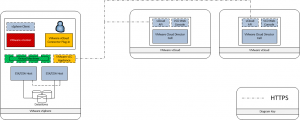
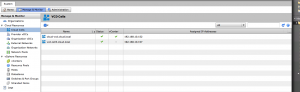
I have had a few questions recently on how VMware vCloud Connector fits in relation to vSphere and vCD installs. I thought this diagram might help answer some of the questions. Listed below is how vCC is installed and configured Step 1: vCC is installed as a Virtual Appliance within a vSphere environment. Step 2: vCC is registered to a vCenter and installs a plug-in Step 3: Administrators access the plug-in through vSphere Client connected to a vCenter that has the plugin installed Step 4: The plug-in is configured with credentials for connections to vCenter servers and VMware vCloud Director cells Step 5: Administrators can then select VMs from vCenter and move to a vCloud Director environment. (Note: All VMs have to be powered off to be migrated to and from vCenter and vCD) Step 6: Migrated VM is powered on at the destination The screen shot below shows the […]
Continue Reading 1
add multiple vcloud cells screenshot

How To: Install and add multiple vCloud Director cells

There has been a few questions about how to add multiple vCloud cells and I have also made a big mistake once by not following the correct installation procedure. This is a small subset of what is listed in the VMware vCloud Director Installation and Configuration guide on page 26. You can download a copy by clicking here Note: If you are adding a second cell to a mature vCD environment and have not configured a NFS transfer share then a few steps need to be taken before adding a second cell. Logon to the original vCD cell(s) Move any files in the original transfer data directory /opt/vmware/cloud-director/data/transfer to a temporary location Shutdown the original vCD cell(s) Logon to the second vCD cell Mount the share and add it to /etc/fstab Power on the original vCD cell Move the files copied previously back to the transfer data directory Note: Before […]

Continue Reading 1

HowTo: Install vCloud Connector

Thought I would write a quick how to step by step guide on how to deploy vCloud Connector and configure the plug-in with vCenter.  Once I have collected them all, I will update the article with the associated screenshots. Deploying the Appliance from OVF Extract the contents of the vCC zip file Login to the Management Group vCenter and select Deploy OVF Template from the File menu Enter the full path of the vcc OVF that was extracted previously and click Next Confirm the details by clicking Next Accept the license agreement and click Next Provide a name for the Virtual Machine and select a Inventory Location, and click Next Select a host or cluster on which to run the vCloud Connector appliance and click Next Select a resource pool and click Next Select a datastore and click Next Select either Thin provisioned or Thick provisioned format and click Next […]

Continue Reading 3

VMware vCloud Director Q&A Part 3

This is part 3 of the Q&A article published last year.  Eventually I will migrate these to the FAQ section of the site. If anyone has any questions that are not included in this Q&A or the other Q&A’s post a comment to https://www.davidhill.co/2011/01/q-a/ and I will answer and include in the FAQ. vCloud Director: vApp Cloning Q. I have a vAPP comprised of 10 VMs. When I add this vAPP to my cloud using the “Add to My Cloud…” option, I see from vCenter that it is cloning each VM in a serial fashion, not in parallel. I was hoping the 10 source VMs would be cloned in parallel to 10 new VMs. Is this expected behavior and are there any options to change this to clone in parallel to reduce the provisioning time? A. Serial cloning is the expected behavior. Cloning and deploying new vApps is always done […]

Continue Reading 0

VMware vCloud Director Host vCDNI Statistics Utility

After reading a colleagues (Kamau Wanguhu) blog article on vCD Network Isolation today I found out about a tool included with the VMware vCloud Director agent installed on ESX/ESXi Hosts. This is a really easy way to look at configuration and statistics for vCD Network Isolation configured on that host. Kamau’s article tells us the following about the tool To get per host vCDNI statistics use: /opt/vmware/vslad/fence-util The utility can be used to display: Configured Networks and there MTU settings Acitve Ports and there port IDs Switch State including inside and outside MAC addresses Port Statistics on a port ID basis When running the command with no options, this provides the help for the utility: ~ # /opt/vmware/vslad/fence-util vsla-fence log at Thu Mar 24 09:09:54 2011 fence-util [options] command [arguments [arguments]] -h This help message. -v Turn on verbose mode -q Turn on quiet mode -r Reset statistics after executing […]

Continue Reading 2
Copyright David Hill

Powered by WordPress. Designed by Woo Themes