Archive | Cloud Computing

All blog posts under this category are related to Cloud Computing.

vcat book

VMware vCloud Architecture Toolkit – vCAT Book released

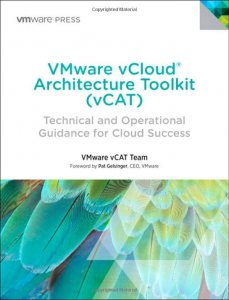
I am pleased to announce that my first book I co-authored has been released on Amazon.  This is really exciting news, which I am extremely pleased about. The book is titled VMware vCloud Architecture Toolkit (vCAT): Technical and Operational Guidance for Cloud Success.  This has been quite a long journey for a lot of us, and we have spent many a long hour writing or editing for this book, and the paper version available on vmware.com. The vCAT book synopsis: The complete vCAT printed reference: knowledge, tools, and validated designs for building high-value vCloud® solutions The vCloud Architecture Toolkit (vCAT) brings together validated designs, tools, and knowledge for architecting, implementing, operating, and consuming modern vCloud infrastructure based on the Software Defined Data Center (SDDC). vCAT has already helped hundreds of VMware customers succeed with vCloud. Now, pioneering VMware architect John Arrasjid has integrated essential vCAT information into a definitive printed […]
Continue Reading 2
Allocation pool changes

Affected by the Allocation Pool changes in VCD 5.1.x? Change it back

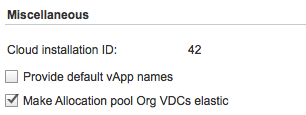
Have you been affected by the Allocation Pool changes in VCD 5.1 when you upgraded? If you have been, and are looking for a way to make this allocation model the same as in VCD 1.5, VMware has included a feature in VCD 5.1.2 that allows you to change it back to the original way it was conceived. First lets look at the changes in the Allocation Pool. Massimo ReFerre has written a great article showing the differences between the two versions of the allocation model http://it20.info/2012/10/vcloud-director-5-1-1-changes-in-resource-entitlements/ In this article he provides a comparison chart for you to easily see the differences, and gives a nice review of allocation models at the end of the article. OK but what does all this mean for me? As I am sure you are more confused than when you started reading this post… perhaps it makes sense to put a stake in the ground […]

Continue Reading 0
Peer Not Authenticated

Peer not authenticated error in vCloud Director

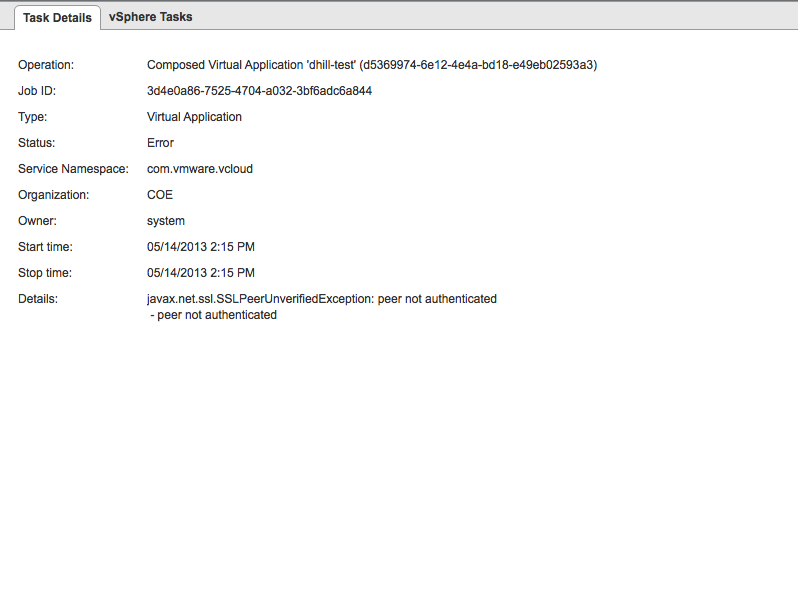
Some of my colleagues and I have been presenting a vCloud training session today, and one of the students got the error “Peer not Authenticated” when deploying a vApp. To diagnose the problem, first we need to turn on debugging in vCloud Director.  We do this by following the steps below: Select System Click the Administration Button Select General Enable the checkbox next to “Display Debug Information”   Peer not Authenticated debug information Going back and looking at the error we see a lot more information. Now looking at this error you can see that it is an issue with SSL. This error can be resolved by disabling the checking of vCenter and vShield certificates.  To do this follow the steps below: Select System Click the Administration Button Select General Scroll down until you see Certificates Remove the ticks from the checkboxes for “Verify vCenter and vSphere SSO certificates” and […]

Continue Reading 2
servicebroker

How I see the future of Hybrid Cloud

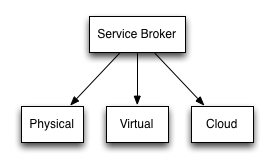
I have been thinking about writing this article on Hybrid Cloud for quite some time, but with everything going on at VMware, article writing time is becoming limited. Recently VMware announced the new Hybrid vCloud service and I wanted to take a look at the whole “Hybrid cloud model” and what I think (without my VMware hat on) it should actually be/do/mean. Lets start by looking at what the definition of Hybrid Cloud is. This article from searchcloudcomputing certainly sums up VMware’s and most peoples view. A hybrid cloud is a composition of at least one private cloud and at least one public cloud. A hybrid cloud is typically offered in one of two ways: a vendor has a private cloud and forms a partnership with a public cloud provider, or a public cloud provider forms a partnership with a vendor that provides private cloud platforms. My favourite way of describing […]

Continue Reading 1

vCloud Director and SE Sparse Disks

So the other day, a bunch of us were asked the question: “A customer of ours has asked if the partial writes issue with linked clones that was found in View and fixed in 5.2 with SE sparse disks has also been fixed in vCloud Director Fast Provisioning with SE sparse disks” Cormac Hogan wrote a really great article on SE Sparse Disks, which can be read by clicking here. This is possibly the most exciting new storage feature in the vSphere 5.1 release. Space Efficient Sparse Virtual Disks (or SE Sparse Disks for short) were designed to alleviate two issues. Let’s describe these issues first of all. Problem Statement #1 – Let’s take a Guest OS running on a linked clone (View desktop if you will), and this Guest OS issues a 4KB write. vmfsSparse disk (which is the format used by traditional linked clones) has a block allocation […]

Continue Reading 0
Copyright David Hill

Powered by WordPress. Designed by Woo Themes